Discover the Power of Therapeutic BDSM
A Revolutionary Collaboration for Healing and Connection
Welcome to a groundbreaking resource that bridges the gap between mental health and BDSM.

About the Therapeutic BDSM Collaborative Network
The NETWORK is a collective of VETTED Kink Knowledgeable Clinicians and Kink Professionals committed to working collaboratively in service to those interested in Therapeutic BDSM as an alternative form of healing for trauma release, self-discovery, and empowerment.
What is Therapeutic BDSM?
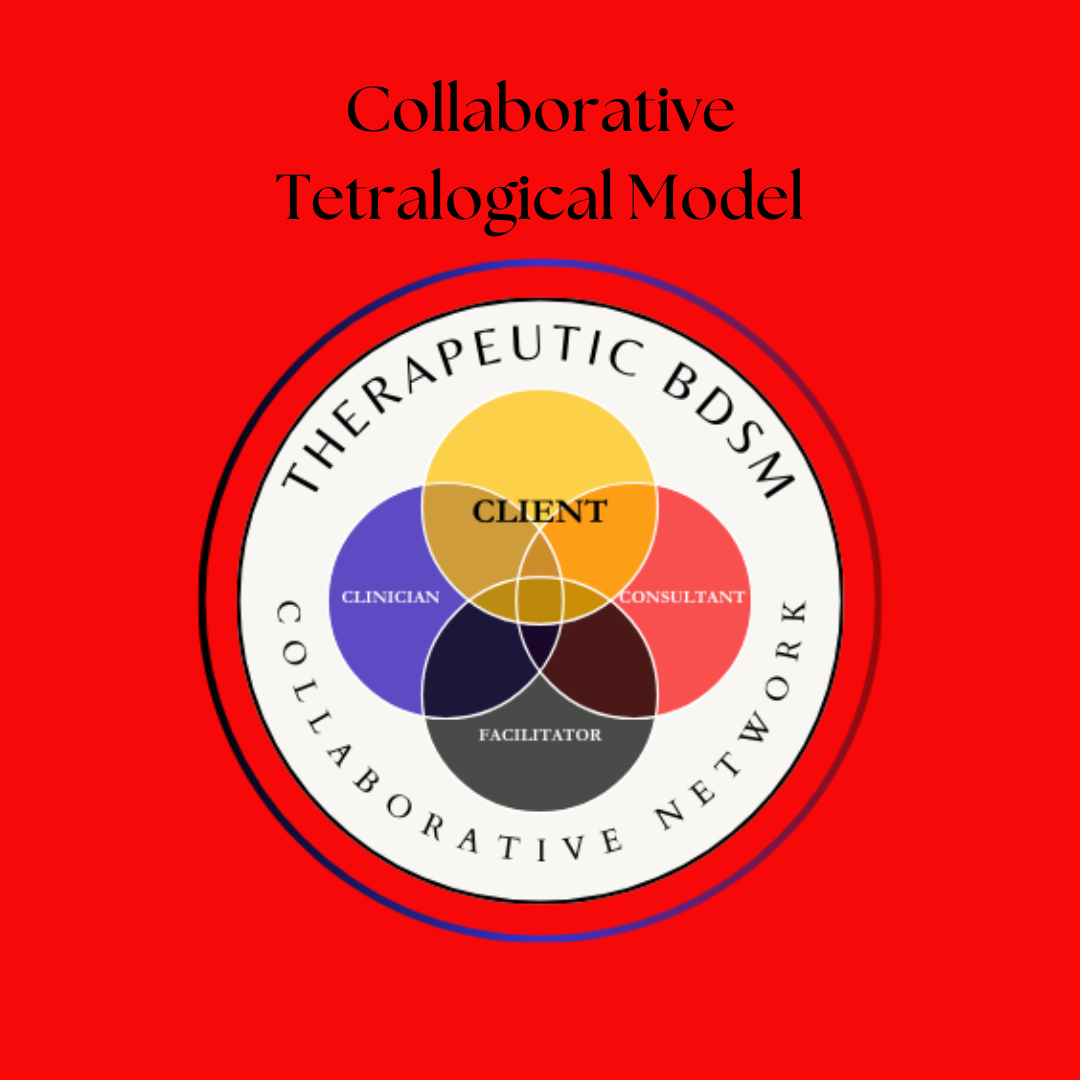
Therapeutic BDSM is a trauma-informed, collaborative approach that uses BDSM dynamics to facilitate healing, self-awareness, and empowerment. In this dynamic, the clinician, pro practitioner, and client each play distinct but interconnected roles.
- The clinician provides a therapeutic foundation, guiding the client through prework, such as Self-Reconciliation Therapy, to ensure they’re emotionally and mentally prepared for the BDSM experience. This prework is essential for uncovering trauma triggers, setting boundaries, and fostering self-awareness.
- The certified kink professional (Certified Facilitator) brings their expertise in BDSM to create controlled, consensual scenes that align with the client’s therapeutic goals. They collaborate closely with the clinician to ensure that the experience is safe, supportive, and transformative.
- The client is the focus, engaging in the scene, using the experience to process trauma, explore emotions, and develop a healthier relationship with themselves and others, under the guidance of both the clinician and practitioner.
Ongoing therapeutic services with the clinician are crucial, as they provide a consistent space for processing emotions, integrating experiences, and ensuring the client’s well-being throughout the journey. This collaboration between clinician and pro practitioner allows for an effective, holistic approach to healing.
Role of the Consultant
Consultants within the Therapeutic BDSM Collaborative Network provide structured external reflection for clinician-facilitator pairs navigating complex cases or questions in their collaborative work. When a pair determines that outside perspective would be helpful, they access a consultant together, bringing what they are navigating and working through it with the support of someone who knows the model deeply.
Through consultation, consultants help pairs examine model alignment, pacing, ethical considerations, power dynamics, and collaboration integrity, returning them to the work with greater clarity and intention.

Who is Therapeutic BDSM For?
Individuals who explore Therapeutic BDSM™ come with a wide range of histories, questions, and clinical concerns. These may include trauma, anxiety, depression, relational difficulties, identity exploration, or complex relationships to power and control. Often, these factors overlap and inform one another.
Therapeutic BDSM™ is not limited to a single diagnosis or experience. It is considered by individuals who are seeking a structured, embodied approach to healing and self examination within a clearly defined and ethically grounded framework.
Introducing the Therapeutic BDSM Collaborative Network
The Therapeutic BDSM Collaborative Network™ is an interdisciplinary model that brings together kink knowledgeable clinicians, certified kink professionals, and kink and BDSM cunsultants. It is designed to create structured collaboration across roles that do not typically work together within traditional clinical spaces.
The mission of TBCN™ is to provide an accountable and ethically grounded framework for individuals seeking alternative pathways to address trauma, deepen self awareness, and reshape their relationship with power, embodiment, and connection. Through collaboration and clearly defined roles, the network supports healing work that is intentional, contained, and professionally guided.
Collaborative Network Members
Clinicians
Clinicians in the Network are licensed mental health professionals who are “Kink Knowledgeable,” not just curious, friendly, or aware. Clinicians will demonstrate knowledge via approved documented training or an extensive interview.
Clinicians will also be trained in Self-Reconciliation Therapy and Therapeutic BDSM techniques as part of their onboarding process. They play a crucial role in working closely with clients to identify therapeutic objectives, negotiate scenes, and address any emotional or psychological concerns that arise while collaborating with pro-practitioners to ensure that scenes are conducted safely, ethically, and therapeutically.
Certified Facilitators
Certified Faciliators are experienced kink professionals certified in Applied Therapeutic BDSM who engage in power exchange with clients as part of their therapeutic process. They are skilled in various BDSM techniques and understand the nuances of integrating these practices into a therapeutic context.
Consultants
Consultants contribute to the Therapeutic BDSM Collaborative Network by providing structured external reflection for clinician-facilitator pairs. Drawing on deep knowledge of SRT, Therapeutic BDSM, and PERK, consultants help pairs examine what they are navigating, including model alignment, pacing, consent, power dynamics, ethical considerations, and collaboration integrity, and return them to the work with greater clarity.
Referrals
TBCN Referral Service
1. Referring clients to therapists or to a therapist-pro-practitioner team
2. Referring therapists to well-trained, ethical, professional practitioners.
3. Helping clients and therapists determine whether Therapeutic BDSM is the right intervention for a particular client.
Due to privacy concerns the Therapeutic BDSM Collaborative Network works via referral coordination. Our vetting board is responsible for vetting, training, and maintaining the intergtity of the network. Find our more about our vetting board and and referral process below.
Legal Considerations
Legal risks are an important consideration for all parties involved in therapeutic BDSM work. Here are some general guidelines and principles addressing potential legal risks for clinicians, facilitators, consultants, and clients, with the goal of minimizing exposure to legal issues:
Legal Considerations for Clinicians
- Licensure and Scope of Practice:
- Ensure that all therapeutic BDSM activities fall within the clinician’s professional licensure and scope of practice. Engaging in activities outside of this scope could lead to professional discipline or legal action.
- Clinicians should maintain clear distinctions between therapeutic work and personal involvement in BDSM activities to avoid conflicts of interest or dual relationships.
- Informed Consent and Documentation:
- Ensure thorough documentation of informed consent, including clear explanations of the therapeutic goals, risks, benefits, and boundaries of therapeutic BDSM.
- All negotiations, consent agreements, and scene-related discussions should be documented in writing to provide a legal record in case of disputes or challenges.
- Mandated Reporting Obligations:
- Understand and comply with mandated reporting laws related to abuse, neglect, or harm. Clinicians should be clear about how consensual BDSM activities differ from abuse, but also be prepared to report any signs of non-consensual harm.
- Malpractice Insurance:
- Secure malpractice insurance that covers unconventional therapeutic approaches such as therapeutic BDSM. Not all policies may cover alternative therapies, so it is crucial to check for coverage.
Legal Considerations for Certified Facilitators
- Consent Contracts:
- Ensure that all activities are consensual and are backed by written agreements that explicitly outline the scope of the scene, the roles, and the limits. This provides legal protection if the boundaries of consent are later called into question.
- Assault & Battery Laws:
- Be aware that certain BDSM activities, even when consensual, can be legally interpreted as assault or battery in some jurisdictions. Ensure that all activities are clearly negotiated and agreed upon in writing to protect against accusations of criminal wrongdoing.
- Sex Work Laws:
- BDSM practices can sometimes be misclassified under laws related to sex work. Be aware of local laws regarding professional BDSM activities, especially if they involve bodily contact or nudity, and ensure compliance with legal frameworks.
- Liability Insurance:
- Pro practitioners should secure liability insurance to protect against potential lawsuits or claims related to physical or emotional harm.
Legal Considerations for Consultants
- Accurate and Ethical Guidance:
- Consultants must ensure that the guidance and consultation they provide reflects ethical practice and does not encourage illegal activity, including non-consensual BDSM practices or actions that violate local laws.
- Disclaimers & Legal Boundaries:
- Consultants should maintain clear professional boundaries when offering consultation. Guidance should be framed within the scope of the framework and professional role, while recognizing that individuals are responsible for complying with the laws and regulations of their own jurisdiction.
- Responsibility in Consultation:
- Consultants must be mindful not to provide advice that could create legal or medical risk. When questions fall outside the scope of consultation, consultants should clearly encourage individuals to seek appropriate legal, medical, or licensed professional guidance.
Legal Considerations for Clients
- Understanding of Consent and Legal Boundaries:
- Clients should have a clear understanding of what they are consenting to, and they should be aware of local laws surrounding BDSM activities to avoid unintentionally engaging in illegal acts.
- Risks of Disclosure:
- Clients should understand the potential legal risks of disclosing BDSM practices, particularly in legal cases such as custody disputes or employment issues. Privacy and confidentiality are critical, but clients should also be aware of situations where disclosure may carry legal consequences.
- Waivers and Agreements:
- Clients may be asked to sign waivers that release practitioners and clinicians from liability for consensual activities. However, these waivers may not always hold up in court, depending on local laws. Clients should fully understand the legal implications of any agreements they sign.
General Legal Protections and Strategies for All Groups
- Legal Consultation:
- It is essential for all parties to consult with legal professionals who are familiar with BDSM, sex work, and alternative therapy laws to understand their rights and obligations. This includes understanding local laws regarding consensual kink and BDSM practices.
- Risk Management and Compliance:
- All activities should be conducted with clear communication and full transparency. Ensure that all negotiations, scenes, and aftercare are documented to provide a record of consent and compliance with legal and ethical standards.
- Confidentiality Protections:
- Protecting confidentiality through non-disclosure agreements (NDAs) or similar legal documents may help prevent unauthorized sharing of sensitive personal or professional information.
- Crisis and Emergency Protocols:
- Establish protocols for handling emergencies, such as accidental injury or emotional distress during a scene. Knowing how to respond legally and ethically in a crisis can reduce legal exposure.
Join the Brave Space
Are you committed to being a part of a collaborative effort of transformation? Interested in being a part of such an unprecedented movement? Ready to start your application process? Then let us introduce you to our Vetting Board! Click the link below to find out more!