Self-Reconciliation Therapy (SRT): Healing Through Embodied Awareness
A certification program for licensed mental health professionals.
Grounded in somatics, attachment, and trauma theory
Focuses on internal reconciliation, nervous system regulation, and clinical collaboration
Prepares clinicians to ethically support clients who engage in Therapeutic BDSM™
This is for therapists ready to expand their clinical toolkit and hold space for nontraditional, body-based healing work.
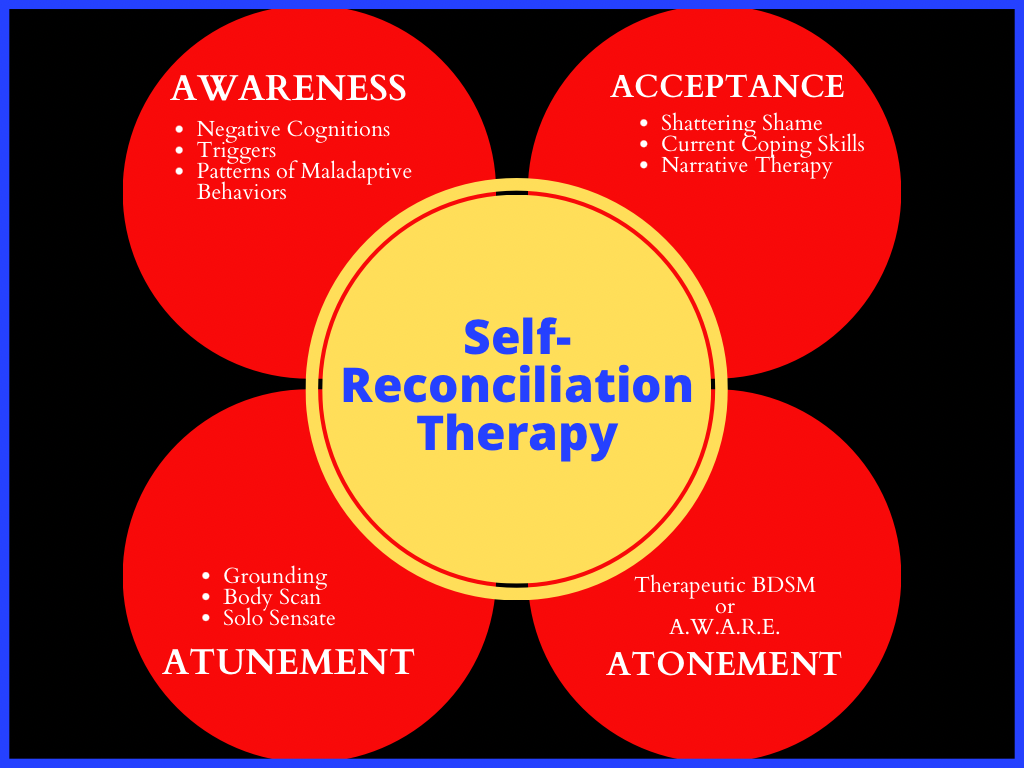
The Four Pillars of Self-Reconciliation Certification
SRT is structured around four foundational pillars that support the journey of healing:
Awareness:
Cultivating conscious knowledge of one’s own character, feelings, motives, and desires.
Acceptance:
Embracing one’s experiences without judgment, acknowledging all attributes, positive and negative.
Attunement:
Harmonizing the mind, body, and spirit by being responsive to internal states and needs.
Atonement:
Taking action to reconcile with oneself, addressing past wrongdoings through restorative practices.
The Guide: "A Power Exchange with Your Pain"
This guide serves as a comprehensive resource for both individuals and practitioners. It offers:
-
Educational content on trauma and healing.
-
Practical exercises aligned with the four pillars.
-
Insights into the integration of Therapeutic BDSM as a healing modality.
The guide can be used independently or alongside a trained practitioner for enhanced support.
Core Principles of the Self-Reconciliation Therapy Certification Program
Somatic Processing
Self-Reconciliation Therapy™ centers the ongoing relationship between thought, emotion, and bodily response. Difficult or overwhelming experiences can shape patterns of tension, breath restriction, vigilance, shutdown, or reactivity. Over time, these patterns can become automatic.
SRT helps clients slow down and notice how these responses show up in real time. Through focused attention to sensation, movement, breath, and emotional shifts, clients begin to recognize the protective strategies their bodies have learned. From there, the work focuses on increasing choice, flexibility, and alignment between internal experience and outward action.
Trauma-Informed
Self-Reconciliation Therapy™ is grounded in trauma informed practice, with careful attention to how overwhelming experiences shape perception, emotion, memory, and embodied response. The work moves at the pace of the client and prioritizes agency, consent, and clarity at every stage.
SRT is designed to create a structured and contained therapeutic environment where clients can engage difficult material without being pushed beyond their capacity. The focus is on building tolerance, strengthening internal alignment, and supporting integration rather than re exposing clients to harm.
Self-Acceptance and Compassion
A central aim of Self-Reconciliation Therapy™ is helping clients come back into alignment with themselves. This includes developing a steadier relationship with their emotions, behaviors, and trauma shaped responses.
Rather than approaching these responses with shame or self criticism, SRT supports clients in understanding how their patterns developed and what they were protecting. Through that understanding, clients build greater self respect, clarity, and internal coherence.
Rescripting and Reprocessing
In Self-Reconciliation Therapy™, clients engage structured exercises that support them in reshaping how they relate to past experiences. This does not mean rewriting history. It means examining the meaning, emotion, and identity that formed around those experiences.
Within a carefully facilitated therapeutic space, clients revisit difficult material at a pace that maintains stability and choice. Together with the clinician, they work to shift rigid narratives, update emotional associations, and develop responses that reflect their current capacity rather than past threat.
Integration of Experience
A core focus of Self-Reconciliation Therapy™ is integration. The goal is not to erase traumatic experiences, but to help individuals weave them into a coherent sense of self.
When trauma remains unprocessed, it can create internal splits, avoidance, or disconnection from certain emotions or parts of one’s history. SRT supports clients in acknowledging what happened, understanding how it shaped them, and bringing those experiences into alignment with who they are now.
Through this process, the individual’s story becomes more organized, less fragmented, and more fully owned.
Self-Regulation
Self-Reconciliation Therapy™ supports clients in building emotional steadiness and response flexibility. Many trauma shaped patterns show up as heightened reactivity, shutdown, or difficulty navigating strong emotion. SRT provides practical tools that help clients recognize these shifts as they happen and respond with greater intention.
Over time, clients strengthen their capacity to move through distress without becoming overwhelmed or disconnected. The focus is not on suppressing emotion, but on increasing choice in how they relate to triggers, stress, and intensity.
Training & Certification
For professionals interested in incorporating SRT into their practice, training and certification are available through the Kink Professional Standards Alliance (KPSA). This ensures adherence to ethical standards and cultural competence in delivering SRT.
The certification is a three month hybrid program consisting of asynchronous content, live discussions, case studies, reflections, integration, and final exmination.
Program is currently $1,497. Click below for more information and access to application. The live portion of the program is now eligible for 18 NBCC Continuing Education Credits!
Self- Reconciliation Therapy Program
Foundations of Self Reconciliation & Therapeutic BDSM
Sets the foundation for understanding Self-Reconciliation & Therapeutic BDSM™ as an applied intervention for healing, empowerment, and embodiment. Introduces the core principles of Self-Reconciliation Therapy (SRT) and explores how Therapeutic BDSM™ can serve as a structured, trauma-informed intervention, distinct from traditional therapy and recreational BDSM,
Bias & Assessing Readiness for Therapeutic BDSM™
Participants will learn how to assess a client’s psychological and somatic readiness for Therapeutic BDSM™ through a trauma-informed lens. This includes understanding attachment wounds, emotional regulation, dissociation, and self-awareness levels as key factors in client suitability.
Trauma, Dissociation, and Emotional Regulation in Therapeutic BDSM™
Participants will explore the neurobiological and psychological impact of trauma in the context of Therapeutic BDSM™.
Power Dynamics, Consent, and Ethical Boundaries
We’ll examine how early relationships influence attachment styles, how these patterns show up in submission, dominance, and scene dynamics, and how Pros can use BDSM as a tool for trust-building, self-regulation, and healing.
Scene Structuring, Collaboration, and Client Integration
Participants will learn how to apply titration techniques, assess somatic attachment repair, and ensure that clients engage in BDSM from a place of self-reconciliation rather than reenactment.
Collaboration, Communication and Beyond: The Integrated Practice of Therapeutic BDSM
Clinicians, educators, and pro practitioners will explore collaborative strategies within the Tetralogical Model, focusing on role clarity, ethical boundaries, documentation, and client-centered communication. Through applied case studies, reflective exercises, and live role-play (where applicable), this module prepares participants to implement Therapeutic BDSM™ as a coordinated, trauma-informed, and ethically sound intervention.
Ready to explore Self-Reconciliation Therapy for yourself or your clients?
Let’s co-create a path toward embodied healing and self-reclamation.
→ [Schedule a Consultation]
→ [Learn About Training & Certification]